


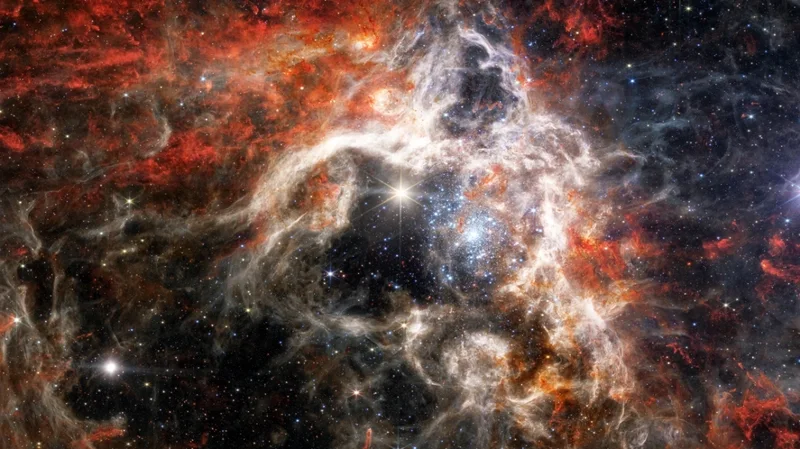
The James Webb Space Telescope discovers six massive, old galaxies that contain as many stars as our galaxy.
The discovery overturns everything scientists have learned about galaxy evolution, as such large galaxies were not expected to be found in such a young universe, when it has reached only 3% of its current age, about 500 to 700 million years after The initial “Big Bang”.
Scientists from different countries (USA, Australia, Denmark, Spain), led by assistant professor of astronomy and astrophysics Joel Lezza of the University of Pennsylvania, made the relevant publication in the journal “Nature”. As he said, “these objects are much more massive than expected. We expected to find only small, young, baby galaxies, yet we discovered galaxies as mature as ours at a time that until now was considered the universe to be in its infancy.”
“It’s crazy. The universe was not expected to be able to self-organize so quickly. These galaxies should not have had enough time to form,” said Erika Nelson, assistant professor of astrophysics at the University of Colorado.