


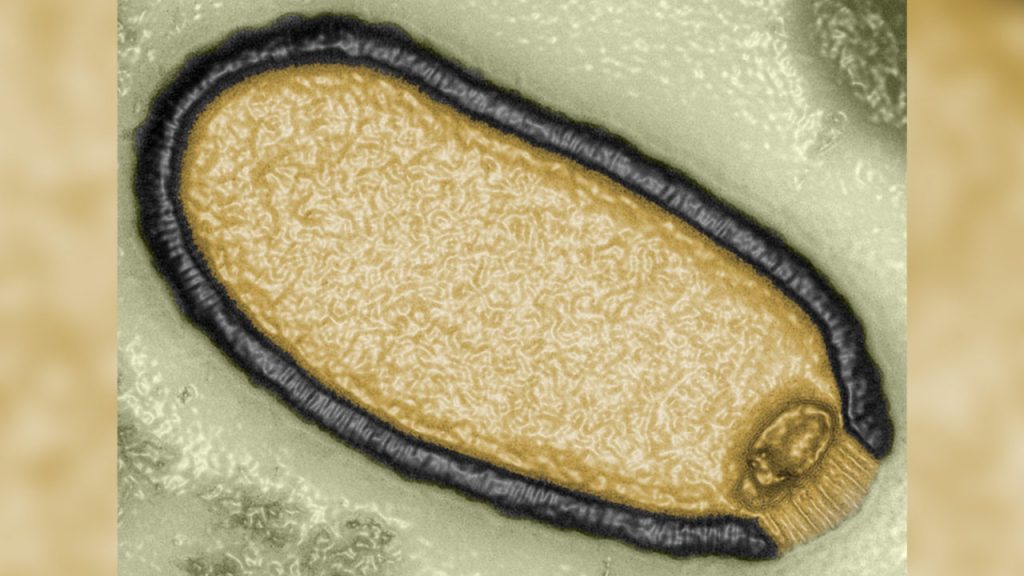


Warming temperatures in the Arctic are melting the permafrost there, potentially releasing a variety of viruses that have lain dormant for tens of thousands of years that could threaten the health of humans and animals on Earth.
Although the outbreak of such a pandemic sounds like a science fiction movie scenario, researchers say the risk remains, albeit low. Chemical and radioactive waste that has been buried there since the Cold War also poses a danger.
“There’s a lot going on down there, so it’s important to keep these layers frozen as much as possible,” says Kimberley Miner, a climate scientist at the California Institute of Technology.
The layer of frost, called permafrost, covers 20% of the Northern Hemisphere and extends from the boreal forests in Alaska to Canada and Russia. Preserved unchanged for thousands of years, it serves as a “time travel machine,” preserving ancient viruses and the mummies of now-extinct animals.
The reason why things are preserved so well in this layer is not only the cold, but also the fact that there is no oxygen and light does not penetrate. But as temperatures in the Arctic warm, the layer is weakening.
Jean-Michel Claverie, professor of medicine and genomes at the University of “Aix-Marseille” in France, has tested soil samples from the permafrost and found “zombie” viruses there. The most special are some viruses first discovered in 2003. Known as giant viruses, they are much larger than ordinary viruses and can be seen with ordinary microscopes.
In 2014, the professor managed to revive a virus that had been frozen for 30 thousand years. For safety reasons, this virus was chosen from those that only infect single-celled amoebae, not animals or humans. The last “resurrection” was that of a 48,500-year-old virus, a figure confirmed by analysis of the soil from which it was extracted. He was pulled from a depth of 16 meters.
Even though they have spent millennia under the ice, their ability to be infectious again opens up an even bigger problem, according to Claverie. “These viruses can be carriers of all the other viruses that can be found in the permafrost,” he says to CNN . “We have seen traces of many other viruses. We know they are there, even though we are not 100% sure they are still alive. But if the viruses that infect amoeba are alive, there’s no reason why others shouldn’t be.”